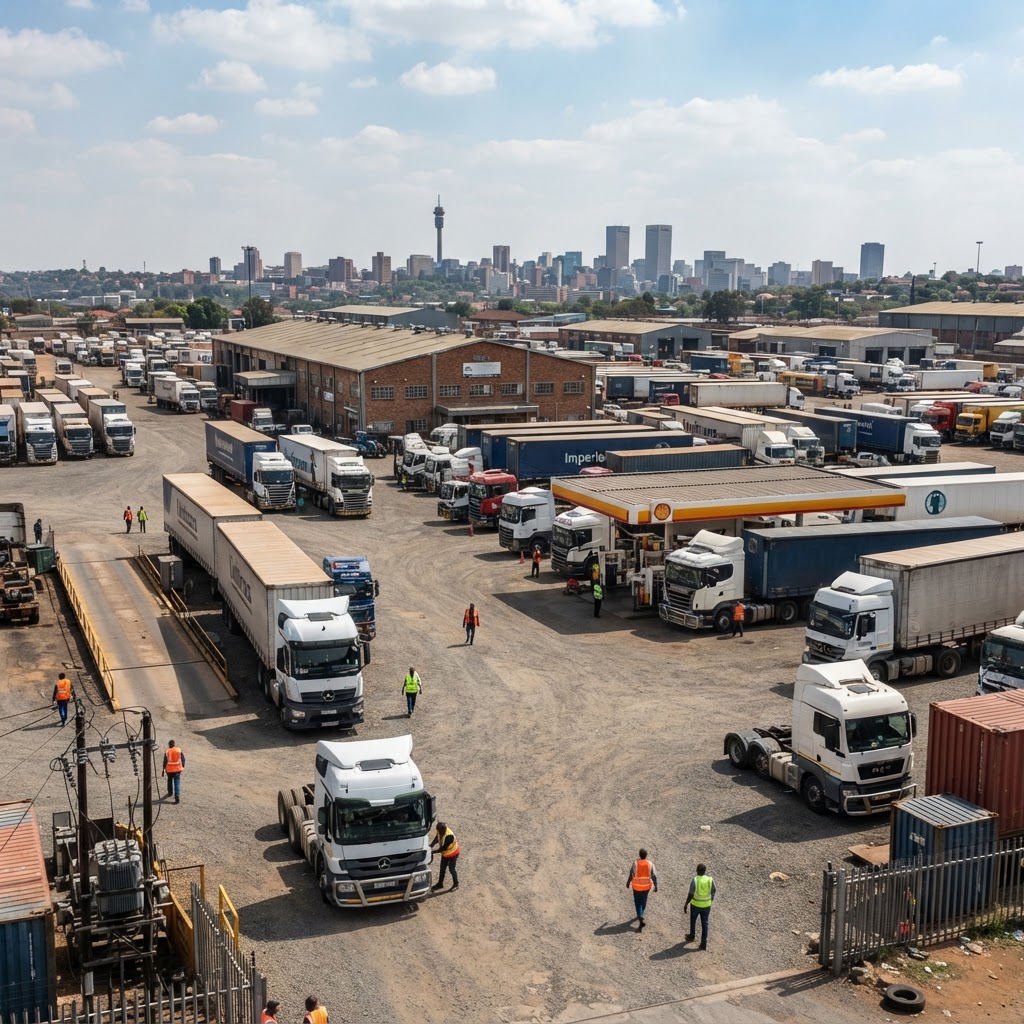
Authorities are currently conducting a widespread search for an unidentified commercial truck driver who fled a City Deep refueling station on October 14, 2026, without settling a substantial bill for fuel. The incident, which has disrupted local logistics operations, highlights the ongoing security challenges faced by service providers within the busy industrial corridor of Johannesburg. Local law enforcement is reviewing surveillance footage as they coordinate with transport unions to track the vehicle involved in the fuel theft.
Incident Details and Ongoing Search
The incident occurred in the early hours of October 14, 2026, when a heavy-duty truck pulled into the service station in the City Deep area. According to witnesses and staff reports, the driver proceeded to fill the vehicle's large tank to capacity before quickly departing the premises without visiting the payment kiosk. Management at the fuel station reported the loss of several thousand rand, prompting an immediate investigation.
- The vehicle is described as a long-haul semi-truck with limited identifying markings.
- Local police are analyzing CCTV footage from multiple entry and exit points to obtain a license plate number.
- Regional fuel retailers have been alerted to watch for similar patterns of 'pump-and-go' theft across Gauteng province.
Authorities have categorized the act as a criminal theft, stressing that such incidents place an undue financial burden on service stations that already operate under tight margins. Police are urging anyone with dashboard camera footage from the vicinity during the incident to come forward.
The Landscape of Logistics Security
The City Deep industrial hub serves as a critical artery for logistics in South Africa, facilitating the movement of goods across the continent. However, as trade volumes have increased throughout 2026, the area has become a primary target for opportunistic crime. Security experts point out that the high turnover of transport vehicles makes it difficult for service stations to verify the identities of all operators in real-time, creating a vulnerability that bad actors are increasingly willing to exploit.
Historically, the logistics sector has relied on a mix of digital monitoring and physical security to mitigate risk. Despite these measures, the rapid pace of international and regional trade often creates gaps in surveillance, particularly during the transition from night to morning shifts when incidents of this nature are statistically more likely to occur.
Impact on the Regional Transport Economy
For the African diaspora and local business owners, the ramifications of this incident extend beyond a single unpaid bill. The incident serves as a stark reminder of the fragile balance required to maintain efficient supply chains that connect Johannesburg to the rest of the continent. Frequent theft at fueling points forces stations to adopt more restrictive payment policies, which in turn causes delays for legitimate transport companies trying to adhere to strict delivery timelines.
This disruption impacts the broader economy, as increased costs associated with theft are often passed down the supply chain, ultimately affecting the price of consumer goods. Maintaining a secure environment at transit hubs like City Deep is essential to ensuring that the regional transport sector remains a competitive and reliable engine for economic growth.
Moving Toward Enhanced Safety Protocols
Industry analysts are calling for a more integrated approach to combat fuel theft, suggesting that standardized, digital payment systems for commercial fleets could effectively prevent these occurrences. By requiring pre-authorization or integrated fleet cards, service stations could eliminate the possibility of human-driven evasion. Reactions from the public and local business groups have been uniform in their condemnation, as community leaders emphasize the need for solidarity in protecting essential infrastructure.
As the investigation continues, local business associations are working to heighten awareness among station managers. The hope remains that by tightening protocols and increasing the presence of security personnel during high-traffic hours, the frequency of such opportunistic crimes will decline, protecting the vital transport corridors that keep the economy moving forward.